
The person who understands your company best often already works there. But learning how to sell a business to a key employee starts with one hard fact: that employee rarely has the cash to buy you out at full value. So the deal structure, how they pay, over what period, and how the taxes land, matters more than the headline price. This guide covers the structures, valuation, tax exposure, and realistic timeline, plus the part most owners skip: what happens to the money after closing.
Why Sell to a Key Employee Instead of an Outside Buyer
An internal buyer already knows your clients, your staff, and how the work actually gets done. That means a smoother transition, faster due diligence, and a real shot at preserving the culture you built.
The trade-off is money. A key employee usually pays less, and pays slower, than a strategic third-party buyer with deep pockets. So the goal is not just closing the deal, it is making sure the proceeds fund your lifestyle for the rest of your life. That reframing shapes every decision below.
How to Sell a Business to a Key Employee: 5 Deal Structures
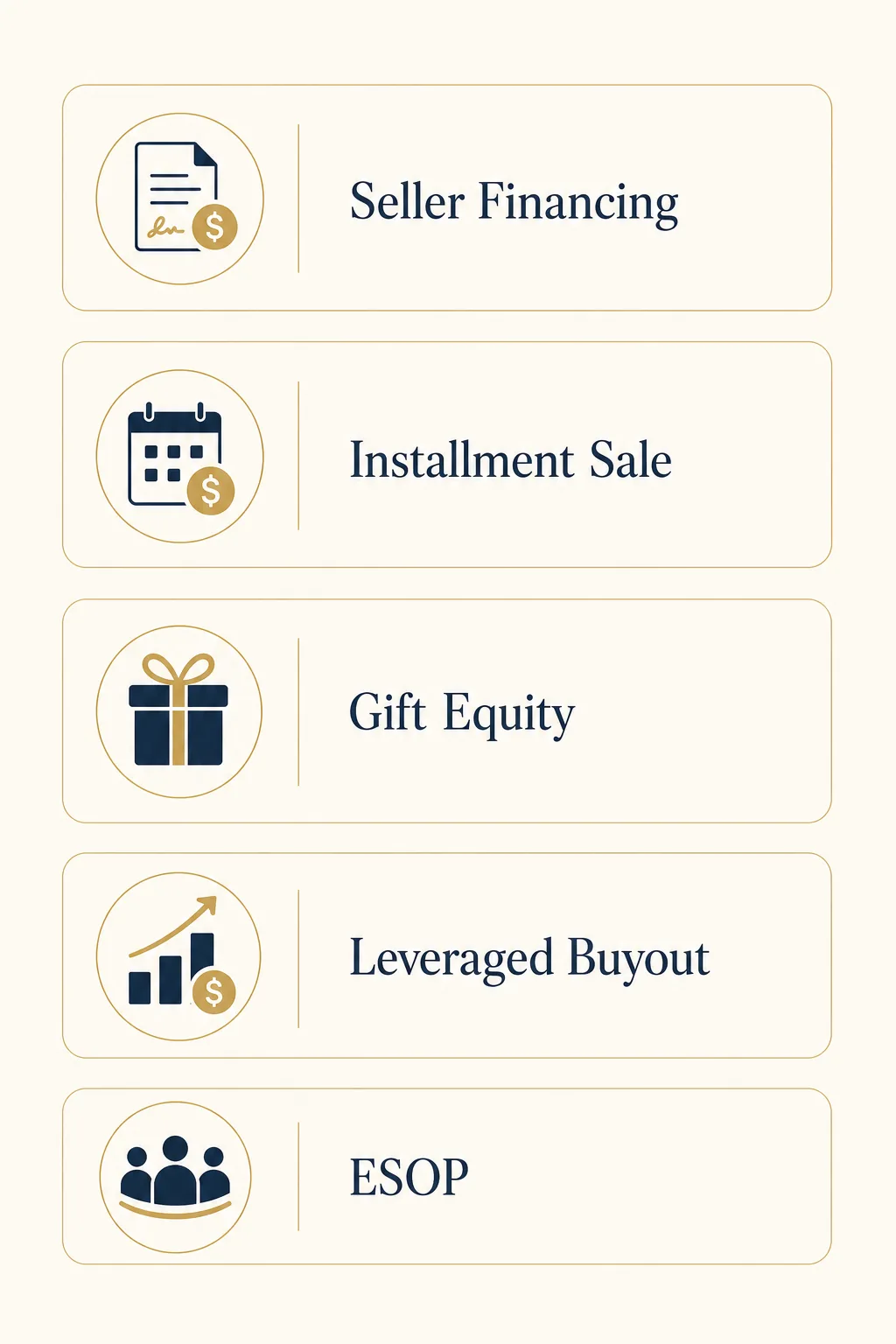
Because the buyer usually lacks upfront capital, most sales combine one or more of these approaches.
| Structure | How it works | Best when | Main trade-off |
|---|---|---|---|
| Owner (seller) financing | You act as the bank; the buyer pays from future profits | Employee lacks cash but the business has strong cash flow | You carry default risk |
| Installment sale | Sale price paid over years; gain recognized as received | Spreading capital gains and smoothing taxes | Payments depend on business health |
| Gift/bonus/sell stock over time | Equity transferred gradually via bonuses or discounted sales | Long runway to groom a successor | Slow; dilutes control gradually |
| Stock redemption / leveraged buyout | The company buys shares, often with outside financing | Business can support the debt | Adds leverage to the company |
| ESOP (employee stock ownership plan) | A qualified plan buys shares with tax advantages | Larger companies, broader employee base | Setup cost and complexity |
When You Finance the Sale to a Key Employee
With seller financing, you hold a promissory note and the buyer repays you from the profits the business generates. It bridges the capital gap, but you carry the default risk, so the note terms, interest rate, and collateral deserve real scrutiny.
Installment Sales and Spreading the Tax Hit
An installment sale lets you recognize the gain as payments arrive rather than all at once. The IRS guidance on installment sales explains that you generally report gain in the years you receive payment, which can keep you in lower brackets and ease the overall burden.
Gifting or Bonusing Equity Over Time
With a long runway, you can move shares gradually through bonuses or discounted sales. For larger companies, the IRS rules for employee stock ownership plans describe a tax-qualified route that lets employees buy in while the seller and company gain tax advantages.
What’s a Fair Price, Valuing the Business
An internal buyer should not simply accept the seller’s number, and the seller should not price on emotion. An independent, third-party valuation, using an earnings multiple, an asset-based method, or both, protects the relationship and gives both sides a defensible figure.
A credible valuation also protects your tax position. Transferring shares well below market value can trigger gift-tax scrutiny; the IRS gift tax guidance explains when a bargain sale is treated partly as a gift.
The Tax Strategy Most Owners Underestimate

This is where an internal sale is won or lost. Capital gains versus ordinary income, installment timing, gift-tax exposure on discounted transfers, state tax, and whether the deal is structured as an asset or stock sale all move the net number substantially.
A sudden liquidity event also creates concentration risk. Alternative investments and private placement options, tools not every firm uses or fully understands, can help diversify the proceeds thoughtfully. Structuring the sale and the reinvestment together is how you keep your post-retirement lifestyle intact, and it is the heart of the comprehensive, tax-aware planning Weston Banks does with business owners.
The goal is not just closing the deal, it is making sure the proceeds fund your lifestyle for the rest of your life.
How Far in Advance Should You Start Planning to Sell Your Business?
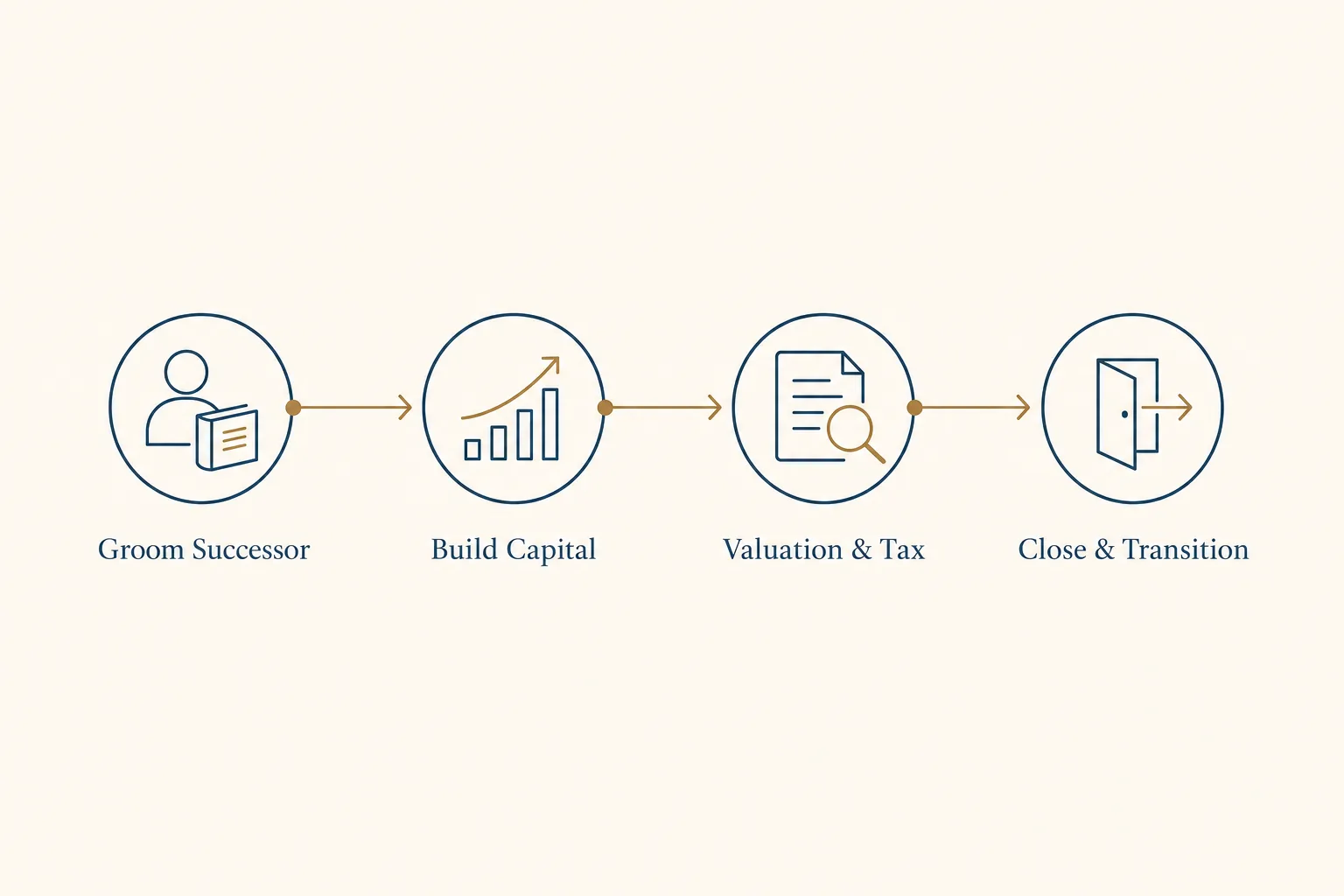
Most internal sales need a runway of three to five years or more, time to groom the successor, help them build capital, and structure the deal tax-efficiently. The U.S. Small Business Administration’s guidance on selling a business reinforces that exit planning works best when it starts early.
| Planning stage | Typical horizon | Key action |
|---|---|---|
| Identify and groom successor | 3–5+ years out | Confirm the employee’s interest and capability |
| Build buyer capital | 2–4 years out | Bonuses, equity, or financing plan |
| Valuation and tax structure | 1–2 years out | Independent appraisal, deal design |
| Execute and transition | Closing year | Sign, transfer, phased handoff |
Market volatility, the weeks around tax day, and year-end tend to be when owners revisit these plans with an advisor, natural moments to pressure-test the numbers.
How to Tell a Key Employee You’re Selling, and the Risks
Breaking the News the Right Way
Raise it privately, once you have a rough structure in mind, and frame it as an opportunity rather than a decision already made. Keep it confidential and consider a non-disclosure agreement before sharing sensitive financials, so a declined offer does not disrupt the business.
Risks and Pitfalls to Plan Around
The main risks are buyer default on a seller note, the financing gap, strain on a close working relationship, and the chance the employee simply declines. Each is manageable with the right terms and contingencies built in early.
If you operate in California, community-property rules and state capital-gains treatment will affect the math. Keep the general plan flexible and defer the specifics to a local attorney and CPA.
Turning the Sale Proceeds Into Retirement Income
Almost no one covers what happens after the check clears, yet that is the whole point. An installment income stream plus a diversified portfolio becomes your actual retirement plan.
The work here is sequencing income, cutting concentration risk from a single large payout, and coordinating with your estate and legacy goals. An ongoing advisory relationship, planning-based rather than transaction-by-transaction, exists to protect that outcome, so the plan you trust keeps supporting your lifestyle for the long run.
Frequently asked questions
Can I sell my company to my employees?
How do I tell a key employee I’m selling the business?
How far in advance should I start planning to sell my business?
What’s the most tax-efficient way to sell to a key employee?
Is selling to a key employee cheaper than an outside buyer?
Key Takeaway
Selling to a key employee works when the structure, the price, the tax plan, and the reinvestment are designed together, not as a one-time transaction, but as an ongoing planning conversation. That is the comprehensive, tax-aware work Weston Banks Wealth Partners does with business owners from our base in Raleigh, NC. If an internal sale is on your horizon, book a first meeting to map the deal and the retirement income it should fund.