
Planning for retirement today means more than saving money. It requires building multiple income streams that can support your lifestyle, protect against uncertainty, and provide lasting financial stability. This guide explains how to build multiple income streams for retirement using real strategies, grounded insights, and a structured approach aligned with long-term wealth planning principles used by Weston Banks.
How to build multiple income streams for retirement
Most people assume retirement is just about saving enough. It’s not. It’s about what happens after the saving stops. That’s where things get uncomfortable.
Because once your salary disappears, your financial life shifts from accumulation to distribution. And if all your income depends on one or two sources, even a small disruption can ripple through everything else.
So when people ask how to build multiple income streams for retirement, what they’re really asking is: How do I make sure money keeps coming in, without relying on luck or timing?
The answer isn’t complicated, but it does require intention. You build layers. Some income streams stay steady. Others adjust to the market. A few give you flexibility when life doesn’t go as planned. And that mix, that balance, is what creates stability.
Why Multiple Streams of Income Matter in Retirement Planning
Here’s the part many people underestimate: retirement doesn’t freeze your expenses. If anything, costs become less predictable. Healthcare shifts. Inflation chips away quietly. Markets don’t cooperate when you need them to.
According to the Social Security Administration, a large portion of retirees depend on Social Security for more than half of their income. That’s a fragile setup. Because Social Security was never meant to carry the full load.
Multiple income streams solve a different problem. They don’t just increase income, they reduce dependency. If one source slows down, another continues. And over time, that kind of structure tends to hold up better than any single strategy on its own.
If you’re thinking long-term, this idea connects closely with building a plan that lasts decades. That’s something explored further through a long-term retirement income planning approach available on the Weston Banks wealth planning platform.
Understanding the 6 Core Sources of Retirement Income
When you break retirement income down, most people end up pulling from a similar set of sources. The difference isn’t what they use, it’s how those sources are combined.
| Income Source | Stability | Risk Level | Tax Impact | Role in Retirement |
| Social Security | High | Low | Partial tax | Foundational support |
| Pension income | High | Low | Taxable | Predictable monthly flow |
| Investment withdrawals | Medium | Medium | Variable | Growth + income |
| Real estate income | Medium | Medium | Tax advantages | Cash flow + hedge |
| Annuities | High | Low | Deferred | Income certainty |
| Side income/business | Variable | High | Taxable | Flexibility |
Each source behaves differently. That’s the point. A diversified retirement isn’t built on sameness, it’s built on contrast.
Proven Retirement Income Strategies That Actually Work
Some people collect income streams without a clear structure. That’s where things start to fall apart. The stronger approach looks more intentional. Essential expenses, housing, food, and insurance are usually covered by predictable income sources. Think Social Security, pensions, or annuities. Strategies like these are often refined through specialized financial platforms such as Echelon Sports & Wealth.
Then comes the second layer. This includes income tied to markets or assets, dividends, withdrawals, and rental income. It’s less predictable, but it grows over time. And finally, there’s flexibility. That could mean consulting, part-time work, or even selling an asset when needed.
Advisory firms like Weston Banks often describe this as aligning financial strategy with real life, not just numbers. You can see that philosophy reflected in their approach to financial planning services and client relationships, where planning tends to revolve around people first.
Best Income Streams in Retirement (Ranked by Reliability)
Not all income streams behave the same way. Some are steady but limited. Others offer growth but come with uncertainty.
| Stream | Passive Level | Stability | Setup Effort |
| Dividend stocks | Moderate | Moderate | Medium |
| Bonds | Low | High | Low |
| Rental properties | Moderate | Moderate | High |
| REITs | High | Moderate | Low |
| Annuities | High | High | Medium |
| Consulting work | Low | Variable | Low |
A well-built plan rarely depends on just one of these. It uses several, each doing a different job.
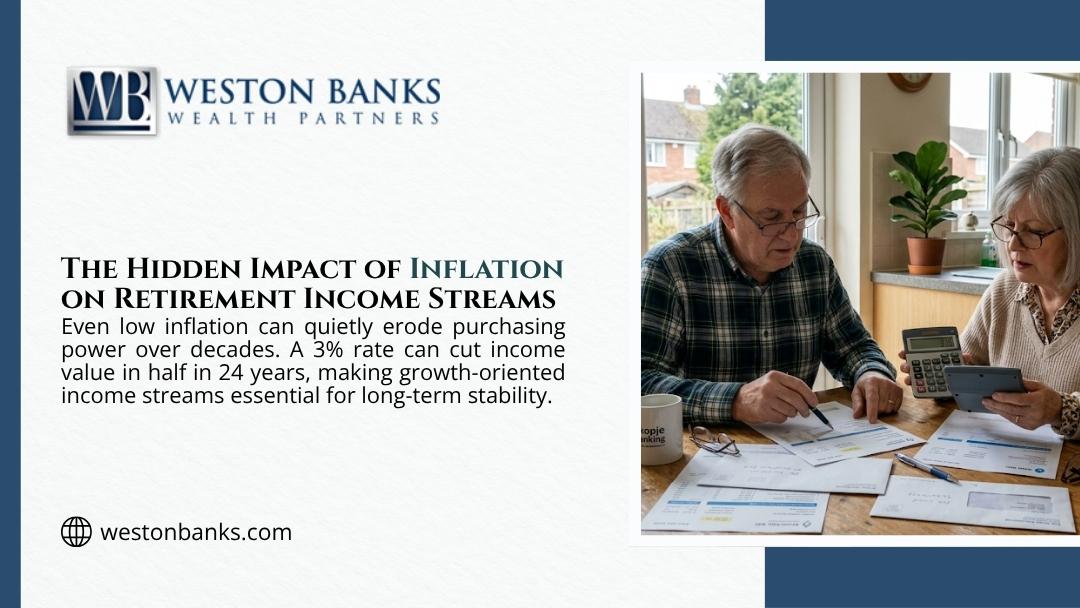
Passive Income for Retirement vs Active Income Streams
Not all income shows up the same way once you stop working full-time. Some money keeps coming in quietly, whether you check on it or not. Other income depends on your time, your effort, or your willingness to stay involved. Most retirees end up somewhere in between.
Passive income, things like dividend-paying stocks, REITs, or annuities, can create a sense of consistency. You’re not waking up each day needing to earn it. That matters more than people expect.
On the other hand, active income still has its place. Some retirees consult, teach, or run small ventures, not always out of necessity, but because they want to stay engaged or maintain flexibility. The difference becomes clearer when you place both side by side:
| Income Type | What It Looks Like | Time Required | Reliability | Common Examples |
| Passive Income | Income generated from assets you already own | Minimal | Generally steady | Dividends, REITs, annuities |
| Active Income | Income tied to your direct involvement | Ongoing effort | Can vary | Consulting, part-time work |
What tends to work best isn’t choosing one over the other. It’s deciding how much of each fits your life. Some people want complete detachment. Others prefer a mix. And that choice shapes everything that follows.
How to Diversify Your Income Without Taking Excess Risk
Diversifying income streams doesn’t mean adding as many sources as possible. It means selecting income sources that behave differently under varying economic conditions.
For example, real estate may provide steady cash flow even when stock markets decline. Meanwhile, dividend-paying stocks can grow income over time, helping offset inflation.
Understanding your risk tolerance is critical. A conservative investor may lean toward bonds and annuities, while someone comfortable with market exposure may include equities and alternative investments.
Educational resources like the Weston Banks financial education center provide insights into how different income sources interact within a broader strategy.
Real Estate Investments and REITs as Retirement Income Sources
Real estate has a reputation for a reason. It produces something tangible, cash flow you can see, not just numbers on a screen. Rental properties, when managed well, can create a predictable monthly income stream. That income often adjusts with inflation over time, which gives it an edge over fixed income sources. There’s also the added layer of long-term appreciation. The property itself may increase in value, even as it generates income.
But here’s the part that often gets overlooked: ownership comes with responsibility. Maintenance issues don’t wait. Tenants come and go. Markets shift. For some, that’s manageable. For others, it becomes a burden. That’s where REITs, real estate investment trusts, enter the picture.
REITs offer exposure to real estate without direct ownership. You’re investing in portfolios of properties rather than managing one yourself. Income comes in the form of dividends, and unlike physical property, REITs are easier to buy and sell.
Still, they behave more like stocks than real estate you can touch. Their value can move with market sentiment, which introduces a different kind of volatility. In practice, many retirees don’t treat this as an either-or decision. They combine both. Direct real estate for control and steady cash flow. REITs for diversification and simplicity.
Dividend Paying Stocks and Income Investments Explained
Dividend-paying stocks tend to sit at the center of many retirement income strategies. Not because they’re flashy, but because they’re reliable when chosen carefully.
Companies that pay dividends are usually established. They generate consistent earnings and share a portion of that with investors. Over time, some of these companies increase their payouts. That gradual increase can help offset inflation, which is one of the biggest challenges in retirement. But yield alone doesn’t tell the full story.
A high dividend yield might look appealing at first glance, but it can signal instability. Sometimes it reflects a company under pressure. That’s why many experienced investors look beyond yield and focus on consistency, how long dividends have been paid, whether they’ve grown, and how sustainable they are.
Income investments go beyond stocks. Bonds, for instance, provide more predictable returns. They don’t offer the same growth potential, but they can add stability to a portfolio.
Most long-term strategies blend both. Stocks provide income that can grow. Bonds offer a steadier, more predictable component. Together, they create balance, something that matters more in retirement than maximizing returns.
Creating Additional Income Streams Before Retirement
People often think about income streams as something you build once retirement is near. In reality, the earlier they’re established, the more effective they become.
In your 20s, even a modest second income stream can have a long runway. It doesn’t need to be large. It just needs time. A small investment account, a side project, or a skill that generates income, these can grow quietly in the background.
By your 30s and 40s, those streams start to take shape. They’re no longer experiments. They become part of your financial structure. At that point, the focus shifts from starting to strengthening. And then something interesting happens.
When retirement approaches, you’re not starting from zero. You’re refining what already exists. That difference, between building early and building late, often determines how flexible your retirement income strategy becomes. It’s not just about money. It’s about options.
This kind of gradual, layered approach is something firms like Weston Banks often emphasize. Not because it’s complicated, but because it works over time.
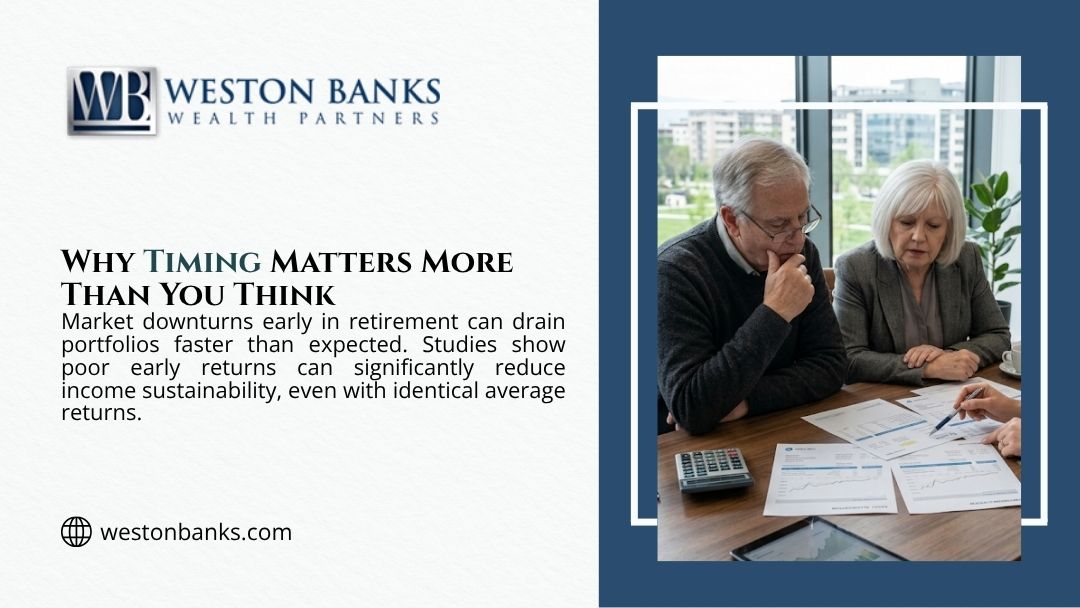
Common Mistakes When Creating Multiple Streams of Income
Building multiple streams of income sounds straightforward. In practice, it’s easy to get off track. Some mistakes don’t show up immediately. They reveal themselves later, when adjustments become harder to make.
| Mistake | What Usually Happens | Long-Term Effect |
| Chasing high returns | Investments become risk-heavy | Income becomes unpredictable |
| Adding too many streams | Strategy becomes scattered | Harder to manage effectively |
| Overlooking taxes | Unexpected liabilities | Reduced take-home income |
| Waiting too long | Limited growth window | Increased pressure on savings |
What stands out isn’t the complexity of these mistakes, it’s how common they are. Most of them come down to a lack of coordination. Income streams are added without a clear role. Over time, that creates friction instead of stability.
How Many Income Streams Should You Have in Retirement?
People often ask for a number. Three? Five? Seven? The truth is, there isn’t a fixed answer. But there is a pattern. Most stable retirement plans include a few core streams, usually between three and five. Enough to provide balance, but not so many that the structure becomes difficult to manage.
What matters more is how those streams behave together. A fixed source like Social Security or an annuity might cover essential expenses. Investment income can handle discretionary spending. Real estate or additional sources can provide a buffer.
It’s less about quantity, more about interaction. Too few streams, and risk becomes concentrated. Too many, and clarity disappears. Somewhere in the middle is where most people find stability.
Building Your Retirement Income Strategy Step by Step
A structured approach makes a difference. Without it, even strong assets can feel disconnected.
Step-by-Step Income Strategy
| Step | What You Do | Why It Matters |
| 1 | Evaluate assets | Understand your starting point |
| 2 | Define income needs | Clarify what retirement requires |
| 3 | Add income sources | Create diversification |
| 4 | Adjust for taxes | Improve efficiency |
| 5 | Revisit regularly | Keep everything aligned |
No single step changes everything. But taken together, they create direction. Over time, that direction becomes a system.
Where Does Retirement Money Come From in a Diversified Plan?
When people picture retirement income, they often think of one source. In reality, it usually comes from several. Social Security tends to form the base. It provides consistency, even if it doesn’t cover everything. From there, investment portfolios begin to contribute through dividends, interest, or structured withdrawals.
Real estate may add another layer, offering income that behaves differently from the market. Additional income streams, whether from part-time work or other sources, can provide flexibility. What matters isn’t just where the money comes from. It’s how those sources work together.
When one slows down, another can compensate. That interplay is what turns separate income streams into a cohesive strategy.
How Weston Banks Helps Build Multiple Income Streams
Weston Banks approaches financial planning differently from many firms. Their focus isn’t just on numbers, it’s on people. That shows up in how they structure income strategies.
Rather than applying a one-size-fits-all model, they take time to understand each client’s situation, supported by an experienced financial advisory team. Income streams are then built around those specifics, goals, timelines, risk tolerance, and long-term priorities.
The result is not just a plan, but an evolving strategy. One that adjusts as life changes. This kind of relationship-driven wealth management approach tends to create more clarity. And in retirement planning, clarity often matters just as much as performance. Investment and brokerage services are offered through Wells Fargo Clearing Services.
Turning Strategy Into Action
A plan, no matter how well designed, only works when it’s put into motion. For some, that starts with small steps, adjusting an investment allocation, adding a new income stream, or revisiting existing ones. For others, it means sitting down with an advisor and mapping out a full strategy.
Either way, progress tends to happen gradually. What matters is starting. If you’re considering your next move, contact Weston Banks financial advisors. We can help turn these ideas into something practical and structured.
FAQs
How to create multiple streams of income in your 20s?
Start simple. Focus on building skills, investing early, and allowing time to do the heavy lifting.
How to create multiple streams of income in your 30s?
Expand what you’ve started. Strengthen investments, consider real estate, and build additional income sources alongside your career.
How to create multiple streams of income in your 40s?
Shift toward stability. Income streams should become more predictable and aligned with retirement goals.
How many income streams do millionaires have?
Many maintain several income sources, often between three and seven, across investments, business interests, and assets.
A More Secure Retirement Starts With the Right Income Strategy
A retirement built on one source of income leaves little room for error. Multiple streams change that. If you’re ready to build a strategy that feels steady, structured, and aligned with your future, Weston Banks offers a place to start that conversation, with guidance that focuses on people first, not just portfolios.
DISCLOSURE: This information is not intended to be a substitute for specific individualized tax advice. We suggest that you discuss your specific tax issues with a qualified tax professional.