
If you’ve ever wondered how do I make sure I don’t run out of money in retirement, you’re not alone. It’s one of the most common concerns people face as they move closer to leaving work behind. The challenge isn’t only about saving enough, it’s about making those savings last through years of changing markets, rising costs, and unexpected life events.
This guide walks through what actually causes retirement shortfalls and how thoughtful planning can help create income that holds up over time.
How Do I Make Sure I Don’t Run Out of Money in Retirement
If you’ve ever asked, how do I make sure I don’t run out of money in retirement, you’re already thinking about the right problem. The issue isn’t just saving enough, it’s making sure your money lasts as long as you do.
Here’s what tends to happen. People spend decades building retirement savings, but once income stops, everything shifts. The focus moves from growth to sustainability. That’s where most plans start to crack.
A durable retirement plan depends on three moving parts working together: steady retirement income, disciplined withdrawals, and a balanced investment strategy. When one fails, the others follow.
What Is Retirement Planning and Why It Matters More Than Ever
Retirement planning used to be simpler. Pension plans carried much of the burden, and life expectancy was shorter. Today, retirement often lasts 25 to 30 years, sometimes longer. Today, according to Social Security Administration research, retirement often lasts 25 to 30 years, sometimes longer.
According to the U.S. Social Security Administration, a 65-year-old today has about a 50% chance of living past 85 (ssa.gov). That changes everything. Longer life means higher costs, more exposure to inflation, and greater reliance on personal savings.
Retirement planning now involves income strategy, healthcare preparation, asset allocation, and behavioral discipline. It’s not just about retiring, it’s about staying financially stable through it.
The Real Reason People End Up Running Out of Money
People rarely run out of money because of one bad decision. It’s usually a slow build, small assumptions stacking on top of each other until the plan starts to give way.
At first, everything looks fine. Savings feel sufficient. The market is cooperative. Spending is controlled. Then timelines stretch. Someone who expected 20 years in retirement ends up needing 30. That extra decade doesn’t announce itself; it simply arrives.
And costs don’t stay where they started. Inflation doesn’t feel dramatic year to year, but over time, it reshapes everything. What once covered a comfortable lifestyle begins to feel tight.
Healthcare adds another layer. It doesn’t rise evenly. Some years pass quietly, others demand large, unexpected withdrawals. Those moments can disrupt even well-built plans.
There’s also a pattern that shows up early in retirement. Spending tends to peak in the first decade. Travel, home upgrades, helping family, it all happens when people feel most free. But those early withdrawals matter more than most realize. Here’s how these pressures tend to unfold over time:
| Factor | What People Expect | What Actually Happens |
| Lifespan | 15–20 years | 25–30+ years |
| Inflation | Minor adjustments | Gradual erosion |
| Healthcare | Manageable yearly cost | Irregular spikes |
| Spending habits | Stable | Higher early on |
| Market returns | Consistent growth | Uneven cycles |
Put together, these aren’t dramatic on their own. But combined, they quietly reshape the entire outcome. That’s usually when people realize, this wasn’t about one mistake. It was about several things happening at once.
How Much Retirement Savings Do You Actually Need
There’s no universal number, but benchmarks can help frame the discussion.
| Retirement Age | Years in Retirement | Approximate Savings Target |
| 60 | 30+ years | 25–30× annual expenses |
| 65 | 25 years | 20–25× annual expenses |
| 70 | 20 years | 15–20× annual expenses |
A common rule suggests withdrawing around 4% annually, but that assumption depends on market stability and asset allocation. The better question isn’t how much I should have, but how will this money generate a reliable income?
Building a Retirement Income Plan That Lasts
A retirement plan doesn’t succeed because of a large balance alone. It works because income keeps arriving in a way that matches real life.
Think about it differently. Instead of asking how much money you have, ask how that money behaves over time. Does it generate income? Does it adapt when markets shift? Does it cover essentials without forcing tough decisions?
Strong plans tend to separate income into layers. The first layer covers what cannot be avoided: housing, insurance, and basic living costs. That portion needs reliability. The second layer supports lifestyle choices, travel, hobbies, and experiences. That portion allows flexibility.
When markets fluctuate, the second layer adjusts. The first remains intact. That separation alone can prevent many financial shocks.
There’s also a pacing element. Income shouldn’t arrive in large, unpredictable bursts. It should feel steady. That consistency changes how people experience retirement; it replaces uncertainty with rhythm.
This is often where personalized planning matters most. Firms like Weston Banks tend to frame income not as a product, but as part of a broader life structure, something that supports both stability and meaning.
Retirement Income Sources You Should Never Rely On Alone
Each income source carries its own strengths and weaknesses.
| Income Source | Stability Level | Risk Profile |
| Social Security | Moderate | Low |
| Investment income | Variable | Medium |
| Rental income | Variable | Medium |
| Pension | Stable | Low |
Relying too heavily on any single source increases vulnerability. A diversified income structure creates resilience.
Smart Withdrawal Strategies That Protect Your Retirement Money
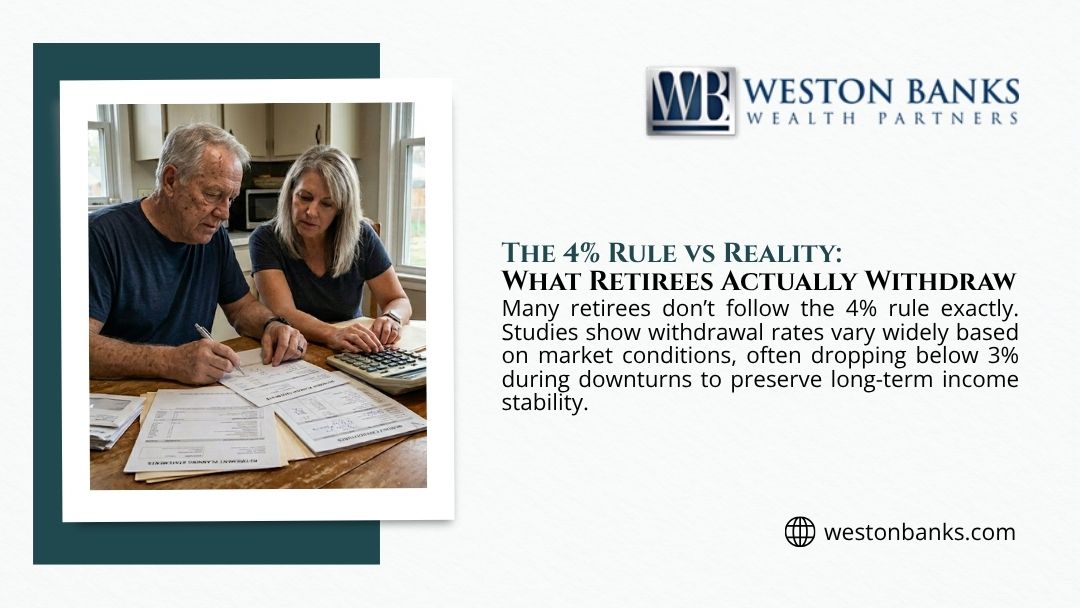
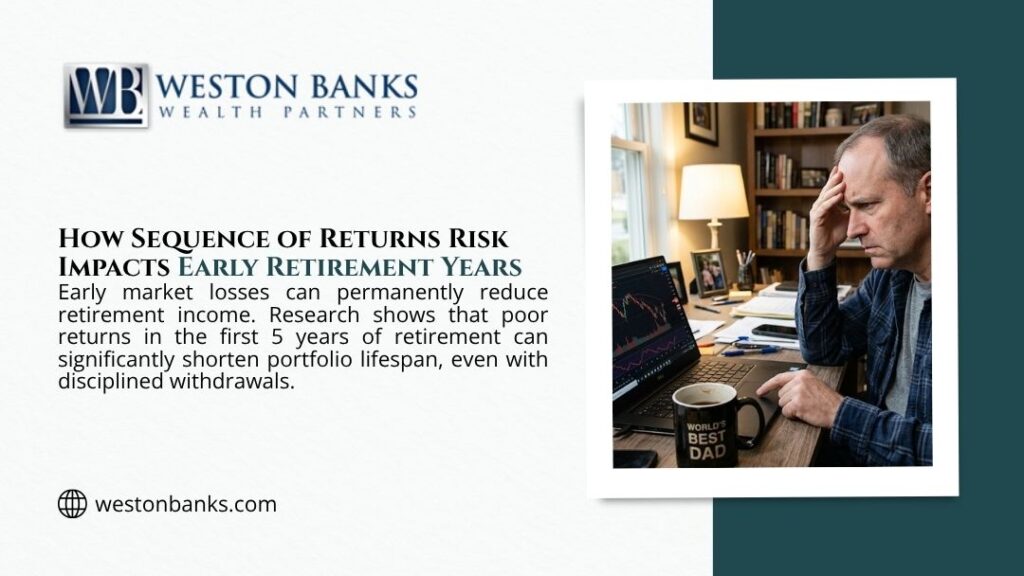
Withdrawals seem straightforward until markets get involved. Then everything changes. A fixed withdrawal plan works well in stable conditions. But markets rarely cooperate for long stretches. When declines happen early in retirement, fixed withdrawals can accelerate losses.
Some people adjust naturally; they spend less when markets fall. Others stick to a fixed number, which can quietly drain the portfolio faster than expected. We explain what sequence-of-returns risk is, and how to set spending guardrails around it, in a separate guide. Different approaches lead to very different outcomes:
| Withdrawal Style | Behavior Over Time | Outcome Pattern |
| Fixed amount (like 4% rule) | Same withdrawals each year | Predictable but rigid |
| Inflation-adjusted | Gradually increases withdrawals | Maintains lifestyle |
| Flexible approach (Dynamic Spending) | Adjusts based on performance | Extends longevity |
| Guardrail method (Guyton-Klinger) | Operates within set limits | Balanced control |
What tends to work best isn’t extreme precision, it’s awareness. When markets are strong, withdrawals can increase slightly. When they’re weak, small reductions help preserve the core. Those adjustments don’t need to be dramatic. Even modest changes early on can extend a plan by years.
Investment Strategies That Reduce the Risk of Running Out of Money
Investment strategy in retirement feels different from it did during working years. Growth still matters, but stability begins to carry equal weight. A balanced portfolio usually holds a mix of growth-oriented assets for long-term expansion, more stable holdings to soften volatility, and liquid reserves for near-term needs.
One approach that often proves useful is time segmentation. Funds needed in the near future should stay in low-risk positions. Assets intended for later years remain invested for growth. This creates distance between market swings and immediate income needs.
There’s also a shift in mindset. Before retirement, volatility can be tolerated. After retirement, it feels more personal because income depends on those assets. That’s why allocation matters, but so does comfort. A plan only works if it can be followed without constant second-guessing.
Some strategies also focus on generating income directly, dividend-paying investments, structured portfolios, or income-oriented funds. These can reduce the need to sell assets during downturns.
In practice, the best strategy isn’t the most aggressive or the most conservative. It’s the one that remains steady under pressure.
How to Build Multiple Income Streams for Retirement
Relying on a single income source often works, until it doesn’t. When income comes from different directions, pressure shifts. If one source weakens, others continue. That balance creates breathing room.
Some income arrives predictably. Social Security, for example, tends to provide a stable base. Other sources move more, investment income changes with markets, rental income depends on conditions, and part-time work varies with availability. Here’s how these streams typically behave:
| Income Type | How It Feels Over Time | Stability Level |
| Social Security | Consistent baseline | High |
| Investment income | Fluctuates with markets | Moderate |
| Property income | Periodic, sometimes uneven | Moderate |
| Active income | Flexible but dependent | Variable |
| Structured payouts | Predictable schedule | High |
The goal isn’t to create complexity. It’s to reduce dependence. When income comes from more than one place, decisions become less reactive. And that’s where stability begins to show.
Healthcare, Inflation, and Hidden Costs That Destroy Retirement Plans
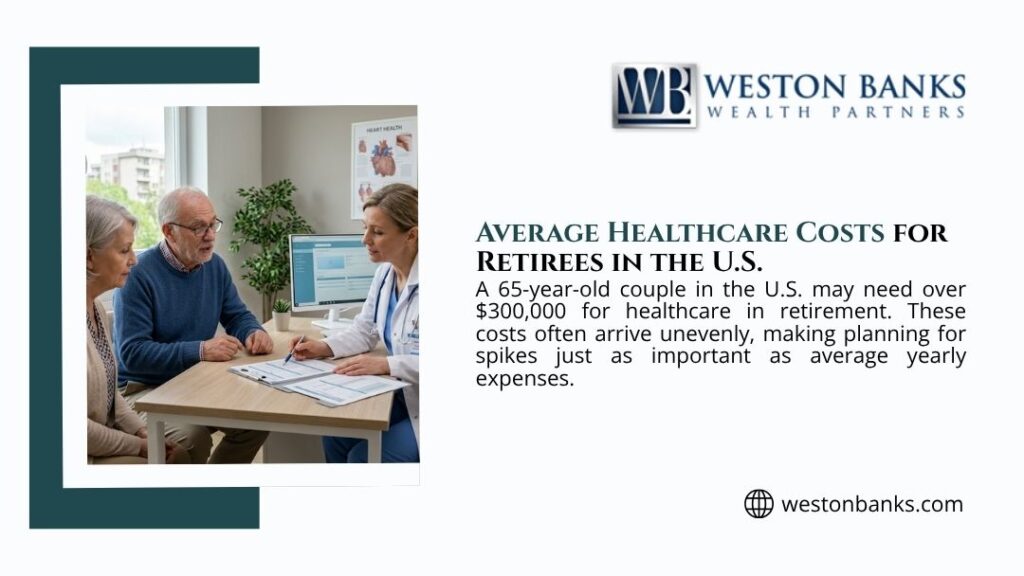
Some costs can be planned almost precisely. Others refuse to follow a predictable path. Healthcare falls into the second category. It doesn’t rise in a straight line. It arrives in phases, quiet years followed by sudden expenses that require immediate attention.
Inflation works differently. It doesn’t shock, it erodes. Over time, it changes what money can actually do. Together, they reshape financial plans more than most people expect.
| Cost Category | Behavior Over Time | Effect on Plan |
| Healthcare | Uneven, event-driven | High disruption |
| Long-term care | Large, unexpected | Significant impact |
| Inflation | Slow, cumulative | Reduced purchasing power |
| Housing | Variable | Moderate influence |
| Lifestyle | Adjustable | Controllable |
What stands out is unpredictability. The most challenging costs are rarely the ones people anticipate clearly. That’s why planning isn’t about eliminating uncertainty. It’s about absorbing it without losing stability.
When Should You Retire to Avoid Financial Stress
Retirement timing rarely feels perfect. It’s usually a trade-off. Leaving earlier creates more freedom, but it stretches resources over a longer period. Waiting longer strengthens financial security but delays that transition.
Even a few additional working years can shift outcomes noticeably. Savings continue to grow. Withdrawal years shorten. Income sources such as Social Security increase. But timing isn’t purely financial. Health, personal priorities, and family dynamics all influence the decision.
The better question isn’t simply when should I retire. It’s whether your financial structure supports the life you want to step into. When those align, retirement feels less uncertain.
Retirement Budget Planning That Actually Works
A retirement budget needs to reflect real life, not just estimates.
| Expense Category | Monthly Range | Considerations |
| Housing | Fixed/variable | Downsizing may reduce costs |
| Healthcare | Rising | Plan for increases |
| Lifestyle | Flexible | Adjust as needed |
A realistic retirement budget separates essential expenses from discretionary ones. That separation gives you control when adjustments become necessary.
What Is the Biggest Risk to My Retirement Savings
Market risk gets most of the attention, but it’s rarely the most damaging. Behavior tends to have a greater impact. Decisions made during uncertainty, selling too early, spending too freely, or shifting strategies frequently, can weaken even strong plans.
There’s also a quieter risk. Overconfidence in a single strategy. Portfolios that lean too heavily in one direction may perform well temporarily, but they carry hidden exposure. Consistency, more than prediction, shapes long-term outcomes. In many cases, the greatest risk isn’t external conditions, it’s how people respond to them.
Expert Insight on Retirement Security
According to the Vanguard research, the most successful retirement plans are those that can adapt when life doesn’t follow expectations. That perspective reflects something experienced planners understand well. No plan unfolds exactly as expected. Markets shift. Expenses change. Timelines evolve.
What matters isn’t predicting every detail; it’s building a structure that can adjust without breaking. That’s where confidence comes from.
How to Know If You Have Enough Money to Retire
There’s a moment when numbers start to feel less abstract. When the question shifts from accumulation to sustainability. Having enough isn’t just about reaching a target. It’s about how income behaves under different conditions.
What happens if markets slow down early? What if expenses rise faster than expected? Does the plan still hold? Those scenarios reveal more than any single number.
A plan that works only under ideal conditions isn’t really a plan. One that holds under pressure, that’s different.
Practical Retirement Planning Tips That Actually Work
Simple adjustments often carry more weight than complex strategies. Reducing fixed expenses early creates flexibility later. Delaying large withdrawals gives investments more time to recover from downturns. Reviewing spending periodically helps keep everything aligned.
None of these steps feels dramatic. But over time, they shape outcomes. Consistency matters here. Not perfection, just steady, thoughtful decisions.
How Financial Advisors Help You Avoid Running Out of Money
A structured plan often benefits from professional oversight. Firms that focus on personalized planning, such as Weston Banks, approach retirement differently. Instead of treating clients as portfolios, they align financial decisions with life goals and long-term legacy.
You can learn more about their approach by exploring who we are and what we do, or connect with their advisory team for deeper insight into their planning philosophy. Their emphasis on tailored strategies reflects a broader truth. Retirement isn’t just financial, it’s personal.
Common Retirement Planning Mistakes You Should Avoid
Mistakes don’t usually look obvious when they happen. They tend to feel reasonable in the moment.
| Mistake | Why It Happens | Long-Term Effect |
| Spending too freely early | Sense of financial freedom | Reduced longevity |
| Ignoring inflation | Underestimation | Loss of purchasing power |
| Lack of diversification | Confidence in one asset | Increased exposure |
| Delaying planning | Uncertainty | Fewer options later |
| Emotional reactions | Market anxiety | Locked-in losses |
Recognizing these patterns early makes them easier to adjust. Most corrections don’t require major changes, just awareness and small shifts.
Life After Retirement: Planning Beyond Money
Retirement doesn’t begin and end with finances. It changes how time is spent, especially for business owners adjusting to life after an exit. Learning how to avoid lifestyle deflation after selling your business can help you maintain purpose alongside financial security. Some people lean into travel, others rediscover interests they set aside years ago, and many find fulfillment through community or part-time work. Without direction, even a well-funded retirement can feel uncertain. With purpose, it becomes something else entirely. Planning for that side of retirement matters just as much as financial preparation.
Without direction, even a well-funded retirement can feel uncertain. With purpose, it becomes something else entirely. Planning for that side of retirement matters just as much as financial preparation.
FAQs
Why do you think so many adults wish they’d started investing earlier?
Because time carries weight. Starting earlier allows small contributions to grow quietly over decades. Waiting often means trying to make up ground quickly, which rarely feels comfortable.
What is the first step in the retirement planning process?
It begins with clarity. Understanding where you stand, income, savings, and obligations, creates a foundation for every decision that follows.
What to do 3 years before retirement?
This period often shifts toward refinement. Reviewing income sources, adjusting investments, and preparing for healthcare costs become more immediate priorities.
Why are many members of younger generations choosing not to save for retirement?
Short-term pressures tend to dominate. Rising costs, uncertainty, and competing priorities make long-term planning feel distant. But delays often increase the effort required later.
A Smarter Way to Retire
If you’ve been asking how to make sure you don’t run out of money in retirement, the answer isn’t found in one decision. It comes from how everything fits together. Income, spending, investment structure, and timing all of it plays a role.
If you’re ready to take that next step, you can explore how Weston Banks approaches retirement planning or reach out to their team to begin shaping a plan built around your life, not just your numbers.
DISCLOSURE: This information is not intended to be a substitute for specific individualized tax advice. We suggest that you discuss your specific tax issues with a qualified tax professional.