
A retirement plan can look strong at the start and still fall apart later. The real challenge is not building wealth, it’s turning that wealth into income that holds up for decades. This guide explains how to create a retirement income plan that lasts 30 years using realistic assumptions, steady income sources, and decisions that stay flexible over time.
How to create a retirement income plan that lasts 30 years
Most people don’t worry about retirement when they’re saving. They worry about it when they stop earning. That shift, from accumulation to income, is where things often get complicated. And that’s exactly where understanding how to create a retirement income plan that lasts 30 years becomes critical.
Here’s what tends to happen. Someone retires with a solid portfolio. On paper, it looks more than enough. But a few years in, expenses rise, markets fluctuate, and suddenly the margin for error feels smaller.
A lasting plan doesn’t rely on guesswork. It creates structure. Income arrives in a way that feels predictable, almost like a paycheck. Expenses are covered without constant adjustment. And when changes happen, and they will, the plan has room to respond.
That structure usually comes from combining multiple income sources rather than relying on a single one. Social Security, investments, and sometimes guaranteed income tools all play a role. Together, they form something more stable than any single piece on its own.
Why retirement planning is important and what most people get wrong
People often assume that once they’ve saved enough, the difficult part is over. In reality, that’s where a different kind of challenge begins.
One issue that doesn’t get enough attention is time. According to the Social Security Administration and related longevity data, a person retiring at age 65 can expect to live roughly 18 to 20 more years on average, with many individuals living into their late 80s or beyond, meaning retirement can often last 25 to 30 years or longer. That changes the entire equation.
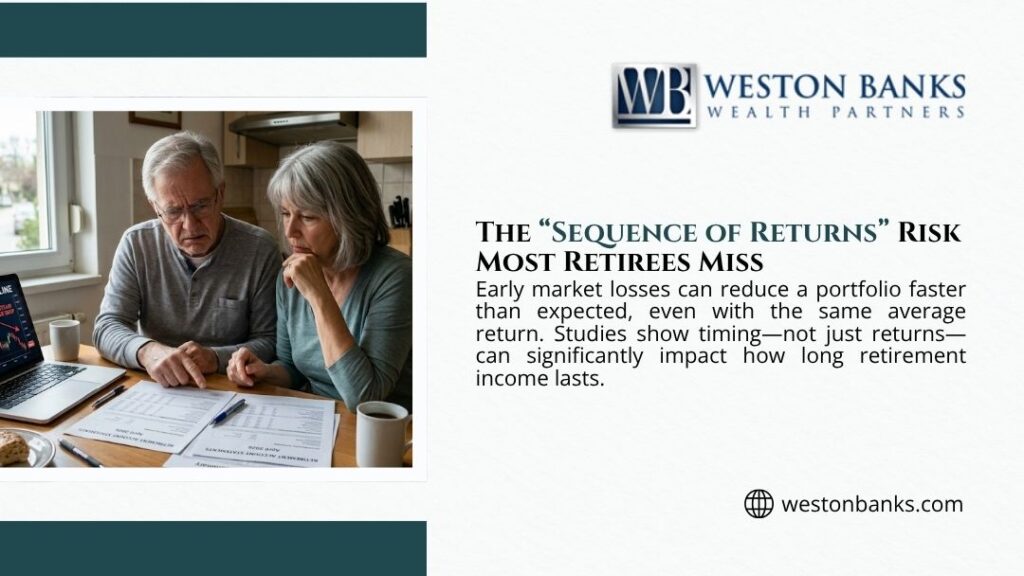
Another common mistake is focusing too heavily on returns without thinking about withdrawals. Taking money out during market downturns can quietly reduce how long a portfolio lasts.
Then there’s behavior. Spending more in the early years, reacting to short-term market movements, or avoiding necessary adjustments can gradually weaken a plan that once looked solid. This is why retirement planning is important. It’s less about hitting a number and more about what happens afterward.
Retirement income needs: How much do you actually need?
There isn’t a universal number that works for everyone. What matters is understanding how your own spending will look over time. A realistic starting point often includes categories like housing, healthcare, and daily living. But the details matter.
| Expense Category | Monthly Estimate (2026) | Notes |
| Housing | $1,600–$2,300 | Varies by mortgage status, taxes, and location |
| Healthcare | $900–$1,400 | Medical costs continue to rise with age |
| Daily Living | $750–$1,050 | Groceries, utilities, transportation |
| Lifestyle | $900–$1,400 | Travel, hobbies, dining |
| Unexpected Costs | $500–$900 | Repairs, emergencies, irregular expenses |
Disclaimer: These figures reflect general 2026 averages; actual expenses can differ widely depending on lifestyle, region, health conditions, and existing financial obligations. These numbers don’t need to be exact, but they should reflect real habits. Retirement budgeting works best when it mirrors everyday life, not ideal scenarios.
Building a retirement budget that adapts over 30 years
Most retirement budgets don’t fail because they were wrong at the start. They fail because life doesn’t stay still.
In the first few years, spending often feels almost celebratory. People travel, help family, and take on projects they had postponed for decades. Then something shifts. Not suddenly, but gradually. The pace slows. Expenses become more predictable. And later still, healthcare begins to take up more space than anyone initially planned. That progression matters more than most spreadsheets suggest.
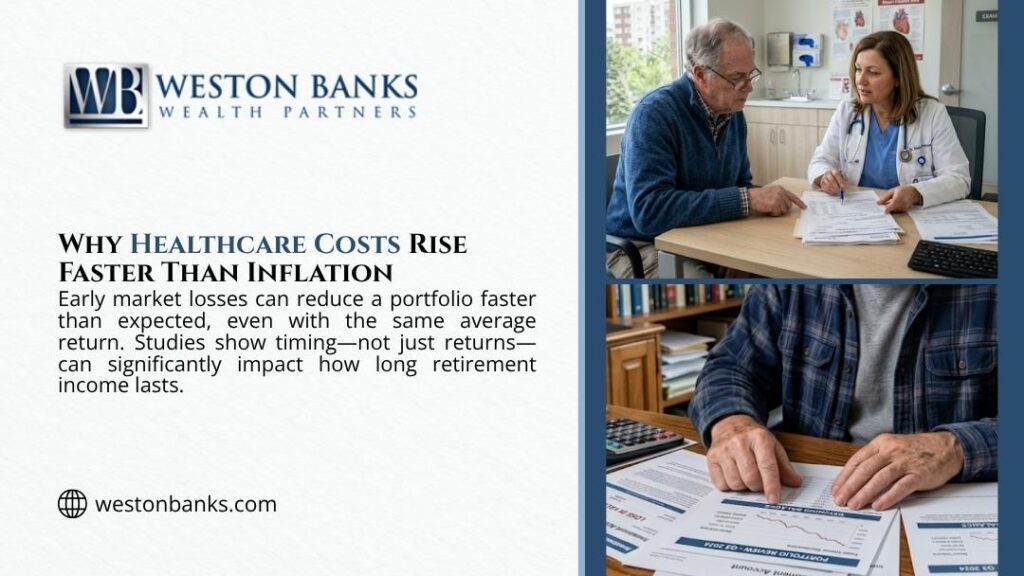
A fixed number rarely survives 30 years unchanged. Inflation alone reshapes the landscape. According to data from the U.S. Bureau of Labor Statistics, even modest inflation compounds over time, quietly increasing everyday costs.
Instead of treating retirement budgeting as a single projection, it helps to think of it as a moving framework.
| Phase of Retirement | What Spending Often Looks Like | What Drives Change |
| Early Years | Higher discretionary spending | Travel, lifestyle choices |
| Middle Years | More consistent spending | Routine living |
| Later Years | Essential expenses rise | Healthcare, support |
What makes a plan durable isn’t precision. It’s the ability to adjust without feeling like everything has to be rebuilt.
Best income streams in retirement to build a steady paycheck
A strong plan spreads income across different sources. That way, no single disruption creates a major problem.
| Income Source | Stability | Growth Potential |
| Social Security | High | Limited |
| Investment Portfolio | Moderate | Higher |
| Property Income | Moderate | Moderate |
| Annuities | High | Limited |
When combined, these sources create something closer to a consistent income flow. Many long-term strategies discussed through structured financial planning approaches focus on building this type of balance, where income is reliable but still able to adapt over time.
Retirement income strategies that reduce the risk of running out of money
Running out of money is rarely the result of one bad decision. It’s usually a pattern, small choices that, over time, begin to compound. One of the more reliable ways to reduce that risk is to avoid putting too much weight on a single approach. Plans built with only one strategy often struggle when conditions change.
Some people keep a portion of their assets set aside for near-term income, insulated from market swings. Others adjust how much they withdraw depending on how markets are performing, rather than sticking to a fixed number every year.
There’s no perfect method. But there is a pattern: plans that adapt tend to last longer than plans that don’t.
This is where experience matters. Many clients working through structured planning conversations find that consistency, not complexity, is what keeps a plan intact during uncertain periods.
Where to put retirement money after retirement for long-term stability
The instinct after retirement is often to play it safe. That usually means moving heavily into low-risk assets. But safety can be misleading. Holding too much in low-yield investments may protect against short-term volatility, yet over time it introduces a different problem: the risk that money doesn’t keep up with rising costs.
On the other side, staying too invested in higher-volatility assets can make income feel unpredictable, especially during market downturns. A more balanced allocation tends to work better.
| Asset Type | Why It’s Used | Trade-Off |
| Fixed Income | Stability, income | Lower growth |
| Dividend Stocks | Income + moderate growth | Market exposure |
| Cash Reserves | Short-term needs | Limited return |
| Equities | Long-term growth | Higher volatility |
The objective isn’t to eliminate risk. It’s to distribute it in a way that doesn’t interrupt income.
The role of annuities in guaranteed retirement income
There comes a point in retirement planning where predictability becomes more valuable than flexibility. That’s often where annuities enter the conversation. A lifetime income annuity provides a steady payment, regardless of market performance. For many, that creates a baseline, a level of income they know will continue.
But this comes with trade-offs. Once funds are committed, they are no longer easily accessible. That lack of flexibility matters, especially if circumstances change.
In practice, annuities tend to work best when used selectively. Not as a complete solution, but as one layer within a broader structure, something that supports essential expenses while other assets remain flexible.
Withdrawal strategy: How to make your money last 30 years
Withdrawal decisions shape how long a portfolio lasts.
| Strategy | Withdrawal Rate | Risk Level |
| Fixed Approach | Around 4% | Moderate |
| Flexible Approach | Adjusted | Lower |
| Segmented Approach | Variable | Lower |
A fixed rule can provide guidance, but real life rarely follows fixed rules. Adjusting withdrawals based on conditions often leads to more sustainable outcomes.
Retirement cash flow planning: Creating a predictable income stream
One of the less obvious parts of retirement planning is how income is actually pulled from different accounts. It’s not just about how much you withdraw. It’s about where it comes from.
Different accounts are taxed differently. Over time, the sequence of withdrawals can influence how long a portfolio lasts.
| Account Type | How It’s Taxed | Typical Use |
| Taxable Accounts | Capital gains tax | Often used earlier |
| Tax-Deferred Accounts | Taxed as income | Used over time |
| Tax-Free Accounts | No tax on withdrawal | Used strategically |
A well-structured plan coordinates these sources rather than treating them separately. This isn’t about maximizing income in a single year. It’s about maintaining consistency across many years.
Investment strategies for retirees that balance income and growth
Retirement doesn’t remove the need for growth. It changes how growth is approached. Focusing only on income can feel safe at first. But over time, it may limit how well a portfolio keeps up with rising expenses.
On the other hand, leaning too heavily toward growth introduces unnecessary swings. A combination of both tends to provide more stability.
| Investment Approach | Income Level | Growth Potential |
| Dividend Focus | Moderate | Moderate |
| Bond Allocation | Higher | Moderate |
| Balanced Portfolio | Higher | Lower |
| Growth Allocation | Lower | Higher |
There isn’t a perfect mix. But there is a practical one, one that supports income today without ignoring tomorrow.
How to start retirement planning early (even in your 30s)
Starting early doesn’t require large contributions. It requires consistency. Someone saving for retirement at 30 has one advantage that can’t be recreated later: time. Over decades, even modest contributions can build momentum through compounding.
That doesn’t mean late starters are out of options. It simply means the approach changes. Contributions may need to increase. Decisions may need to be more deliberate.
But whether early or late, the principle stays the same, progress compounds, even when it doesn’t feel like it at first.
Common mistakes that destroy retirement income plans
Most retirement plans don’t fail all at once. They weaken gradually. Spending too much early on is one example. It doesn’t seem significant in the moment, but it reduces flexibility later. Inflation is another. It’s easy to overlook in the short term, but over time, it reshapes what income can support.
Then there’s behavior. Reacting to market movements, especially during downturns, often leads to decisions that are difficult to reverse.
| Common Mistake | Long-Term Effect |
| Early Overspending | Reduced flexibility later |
| Ignoring Inflation | Lower purchasing power |
| Emotional Reactions | Disrupted strategy |
| Lack of Structure | Inconsistent income |
Recognizing these patterns early tends to prevent larger issues later.
Real-life example of a 30-year retirement income plan
A simple example can illustrate how different income sources come together.
| Income Source | Annual Income |
| Social Security | $25,000 |
| Investment Withdrawals | $40,000 |
| Supplemental Income | $15,000 |
| Total annual income | $80,000 |
Note: Please speak with a financial professional about your specific situation. With careful management, this type of structure can support long-term income needs.
How to build a retirement income plan that adapts to market changes
Markets rarely move in a straight line. Plans that assume they will tend to run into trouble. Adaptability doesn’t require constant changes. In fact, too many adjustments can create their own problems. What tends to work better is a steady approach, reviewing, adjusting, and continuing forward.
| Adjustment | Why It Matters |
| Rebalancing | Keeps allocation aligned |
| Withdrawal Changes | Reduces pressure during downturns |
| Expense Review | Maintains balance between income and spending |
Over time, these smaller adjustments tend to have a larger impact than any single decision.
Working with financial professionals for long-term income security
Retirement decisions rarely exist in isolation. Income, taxes, investments, they all connect. Trying to manage each piece separately can make the process feel more complicated than it needs to be.
Working with experienced advisors often brings those pieces together into something more cohesive. Not necessarily more complex, but more organized. You can also meet the team behind these strategies to better understand their approach.
Many individuals find that a relationship-focused approach, as the one reflected in Weston Banks’ advisory philosophy, provides clarity over time. And that clarity tends to matter more as decisions accumulate.

How to make your retirement income plan last longer than expected
Extending a retirement plan doesn’t usually come from one major change. It comes from consistency. Delaying Social Security benefits can increase income. Adjusting withdrawals during market downturns can preserve capital.
Revisiting spending patterns from time to time can help maintain balance. Individually, these choices may seem small. Over time, they tend to shape the outcome.
FAQs about retirement income planning
How do I know if my retirement income will last 30 years?
A long-term plan considers withdrawal rates, inflation, and life expectancy rather than relying on a fixed number.
What is the safest income source in retirement?
Social Security benefits and guaranteed income options tend to provide the most stability, though they are rarely sufficient on their own.
When should you start saving for retirement?
The earlier, the better. Starting in your 30s allows more time for growth and reduces pressure later.
Can I rely only on investments for retirement income?
Relying on one source increases risk. Multiple income streams create more stability.
What is a lifetime income annuity?
It’s a financial product that provides income for life, often used to cover essential expenses.
How much should I withdraw each year?
Many start around 4%, but adjustments based on market conditions can improve long-term outcomes.
Why is retirement planning important?
Without a structured approach, financial decisions become reactive, increasing the risk of running out of money.
A plan that supports the life you want
A retirement income plan should feel steady, not something that needs constant attention or second-guessing. When income is structured well, decisions become clearer. And when decisions become clearer, retirement feels less uncertain. If you’re looking for a more thoughtful, long-term approach, you can explore working with Weston Banks wealth management to build a plan that reflects both your financial goals and the kind of life you want to live.
DISCLOSURE: This information is not intended to be a substitute for specific individualized tax advice. We suggest that you discuss your specific tax issues with a qualified tax professional.