
If you are asking, “How do I protect my retirement if my business sale falls through,” the first step is to stop treating the sale as your only retirement plan. A failed deal does not have to wreck your future, but it does force a reset. You need a personal income plan, a business cash flow plan, asset protection planning, tax review, insurance review, and a second-look exit strategy. The same planning discipline applies when a deal does close, since sustaining your lifestyle after a completed sale depends on the income plan rather than the transaction itself. For many business owners, the goal is not to rush into the next offer. The goal is to help protect your lifestyle, reduce unnecessary risk, and keep the business strong enough to sell later on better terms.
How Do I Protect My Retirement if My Business Sale Falls Through?
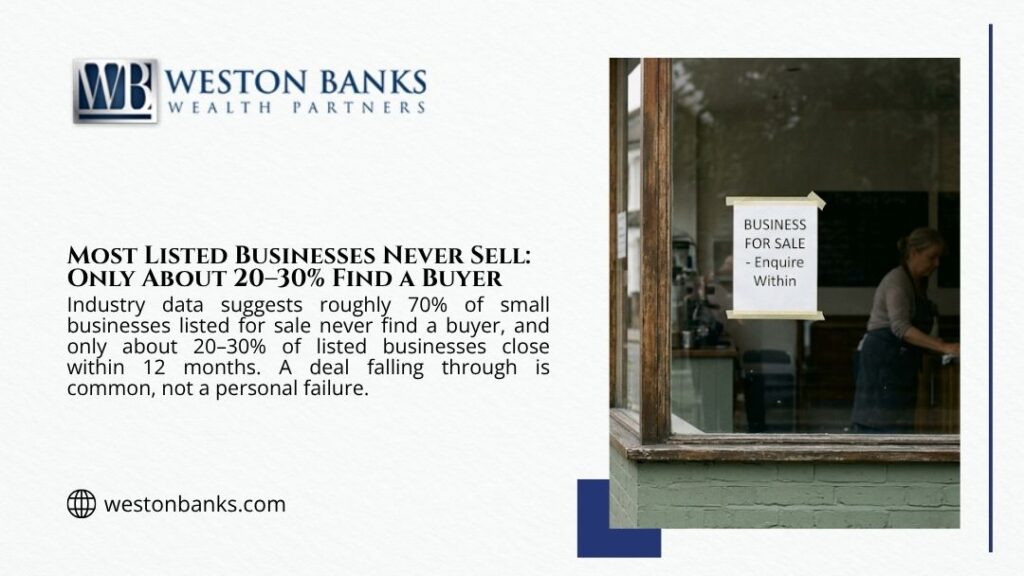
When a business sale falls through, retirement can suddenly feel a lot less certain. One week, the deal looks close. The next, the buyer backs out, financing stalls, due diligence gets messy, or the final offer lands far below what you expected. And there you are, still running the company, still tied to payroll, still dependent on business income, and still wondering how the next stage of life is supposed to work.
So, how do I protect my retirement if my business sale falls through? You start by building a plan that does not depend on one buyer, one valuation, or one closing date. For owners with partners, part of that backup plan is deciding whether you need a buy-sell agreement, because a funded agreement gives you a built-in buyer when the outside market does not cooperate.
That sounds simple. It is not always easy. Many business owners have most of their net worth tied up inside the company. The business pays their income, funds their lifestyle, holds their identity, and, in many cases, is expected to become their retirement nest egg. But here’s the problem: a business is not the same thing as a liquid retirement account. It may have value on paper, but that value only helps your retirement if it can turn into dependable cash flow when you need it.
SCORE has reported that some entrepreneurs delay or avoid retirement savings because cash is often tied up in the business. Its retirement article notes that 21% of surveyed entrepreneurs used retirement savings to invest in their business, while 18% expected to sell the business to fund retirement. That is a risky place to be if the deal does not close.
For Raleigh business owners and high-net-worth individuals, this is where comprehensive planning matters. A firm such as Weston Banks Wealth Partners can help connect investment management, retirement planning, tax mitigation, estate planning, and business succession planning into one working plan rather than several disconnected conversations.
First 30 Days After a Business Sale Falls Through
The first month after a failed deal is not the time to make loud, emotional money moves. It is the time to slow the room down, protect cash flow, and find out what actually broke.
Start with the buyer’s reason for walking away. Was it financing? Valuation? Due diligence? Customer concentration? Owner dependence? A lender issue? A tax concern? Those answers matter because they tell you whether the problem was the buyer, the market, the business, or the deal structure.
Next, pause major personal withdrawals unless they are already part of your retirement income plan. A failed sale can tempt an owner to pull more cash from the business to “make up” for the missing proceeds. That may feel reasonable in the moment, but it can weaken the company right when you need it to look stable for the next buyer.
Then review household cash reserves, business cash flow, debt obligations, payroll, insurance coverage, and retirement account contributions. If you were counting on the sale to fund your next stage of life, ask your financial advisor to model retirement without the sale proceeds, with delayed proceeds, and with a lower sale price. Those three views can show whether you still have room to retire, need to keep owner income for a while, or should rebuild the business before you go back to market.
| First 30-Day Step | Why It Matters | Who Should Be Involved |
| Ask why the buyer walked away | Shows whether the issue was price, risk, financing, or business quality | M&A advisor, attorney, CPA |
| Review personal cash reserves | Helps prevent rushed withdrawals from retirement or business accounts | Financial advisor |
| Update business cash flow | Shows whether the company can support operations and owner income | CPA, business advisor |
| Protect retirement accounts | Helps avoid short-term decisions that may hurt long-term security | Financial advisor, CPA |
| Recheck insurance and legal exposure | Helps reduce personal and business asset risk | Attorney, insurance specialist |
For Raleigh business owners, this step matters even more when most new relationships come through referrals. A buyer, lender, or referred prospect may look closely at whether the company still appears steady after a deal fails. Calm planning sends a better signal than panic.
Why a Failed Business Sale Can Put Retirement Planning at Risk
A failed sale creates two problems at once. The first is emotional. You may have already pictured life after the exit. The second is financial. Your future income plan may have assumed a lump-sum sale, an installment note, a rollover equity event, or a clean handoff to the next owner. When that money does not arrive, the retirement plan has to be rebuilt.
The most common issue is concentration risk. Your wealth may be stuck in one private business. That business may be profitable, but it is still illiquid. You cannot spend a valuation report. You cannot use a buyer’s old letter of intent to pay household bills. You need actual income, actual liquidity, and actual protection against financial loss.
Kiplinger makes the risk clear in its business-owner retirement coverage: “relying only on the sale of a business to fund your retirement is too risky when your future is on the line.” That is the heart of the issue. If your company is your largest asset, your retirement plan may look strong on paper but still lack the liquidity, diversification, and cash flow needed to support your lifestyle if a buyer disappears.
And that’s why it matters. If the sale falls through, the question is not only “What is my business worth?” The better question is, “How much of my retirement depends on a business I cannot sell today?”
Rebuild the Retirement Plan Around Income, Not Sale Price
A business owner who planned to retire after a sale often starts with the wrong number. They focus on gross sale price. A better retirement plan starts with required income.
What does your household need each year after tax? What spending is fixed? What can change? How much income can your current investment accounts produce? What happens if you keep the business for another two years? What if you sell for 30% less than expected? What if you never sell and instead shift to an internal succession plan?
This is where a retirement income plan becomes more useful than a hopeful exit number. Weston Banks has written about the risk of outliving assets in retirement, and its piece on how to not run out of money in retirement fits this exact problem. The point is not fear, but clarity.
A strong reset plan should compare several possible futures. One version assumes a delayed sale. One assumes a lower sale price. One assumes continued owner income. One assumes a partial sale, internal transfer, or family succession. If the plan only works when everything goes right, it is not a retirement plan. It is a bet.
| Retirement Protection Move | Why It Helps After a Failed Sale | Who Should Review It |
| Build a 12 to 24-month household cash reserve | Gives breathing room while the business is relisted or restructured | Financial advisor and CPA |
| Model retirement income without sale proceeds | Shows whether lifestyle can survive without a perfect exit | Financial advisor |
| Review owner salary and distributions | Keeps personal cash flow stable without starving the company | CPA and business advisor |
| Stress-test investment accounts | Shows how market volatility affects long-term retirement income | Investment advisor |
| Rework the exit timeline | Prevents a rushed second sale at a weak valuation | M&A advisor and attorney |
Protect Cash Flow While the Business Is Still Yours
A sale that falls apart can leave the owner tired, distracted, and exposed. The business still needs leadership. Customers still need service. Employees still need direction. Lenders still expect payments. Vendors still watch for signs of trouble. Cash flow becomes the bridge between today’s disappointment and tomorrow’s better exit.
Start with a clean cash flow review. Look at revenue quality, margins, debt service, owner compensation, payroll, recurring expenses, and upcoming capital needs. If the business relies too heavily on you, that can hurt both income stability and future buyer confidence. If financial reports are messy, buyers may discount value or walk away again.
This is also where small business exit strategy planning becomes practical. It is not only about finding a buyer. It is about making the business easier to understand, easier to operate, and easier to transfer. Weston Banks covers this broader transition topic in its overview of what to expect during the business sale process.
A failed deal may reveal weak spots that were already there. Maybe customer concentration was too high. Maybe the buyer worried about key employee retention. Maybe the books needed better cleanup. Maybe the company depended too much on the founder. Frustrating? Sure. Useful? Absolutely. A failed deal can become a diagnostic tool if the owner is willing to use it.
Separate Business Risk From Personal Retirement Assets
If you are asking how to protect your assets after a failed sale, start with separation. Business risk and personal retirement security should not live in the same bucket.
Personal asset protection matters because a stressed business can create pressure. Owners may be tempted to use personal assets for small business expenses, pledge home equity, take personal guarantees, or drain retirement accounts to keep operations steady. Sometimes that is necessary. Often, it is a sign that the business and personal plan need firmer walls.
For many owners, the first question is whether the legal structure still fits. A small business LLC can provide liability separation, but only when properly maintained. That means clean records, separate accounts, signed contracts, proper insurance, and no casual mixing of company and household expenses. LLC asset protection strategies are not magic. They work best when paired with good operations and legal discipline.
Owners who ask “how do I protect my assets” or “how to protect personal assets from business lawsuit” should speak with an attorney before there is a known claim or creditor issue. Asset protection planning done after trouble appears can create legal problems. Done early and lawfully, it may help reduce exposure.
| Asset Protection Area | Practical Example | Why It Matters |
| Entity structure | Review LLC, S-corp, partnership, or holding company structure | Helps separate personal and business asset exposure |
| Insurance | Review general liability, E&O, cyber, umbrella, life, and disability coverage | Adds protection against lawsuits, operational risk, and income loss |
| Contract review | Update customer, vendor, lease, and employment agreements | Reduces unclear liability and future buyer concerns |
| Personal guarantees | Identify loans, leases, and credit lines tied to personal assets | Shows where personal wealth is still exposed |
| Estate documents | Update wills, trusts, powers of attorney, and beneficiaries | Keeps legacy plans aligned with current business reality |
This is not about hiding money. It is about proper business asset protection and personal asset protection before a crisis forces bad choices. For owners with significant wealth, the best business structure for asset protection depends on the company, debt, real estate, family goals, and state law. A Raleigh owner should not copy a Washington asset protection strategy from the internet and assume it works in North Carolina.
Keep Retirement Accounts Protected and Funded Where Possible
If the business sale falls through, retirement accounts deserve special attention. Owners sometimes stop contributions because cash feels tight. Others raid retirement funds to keep the business alive. That may solve a short-term problem, but it can damage long-term security.
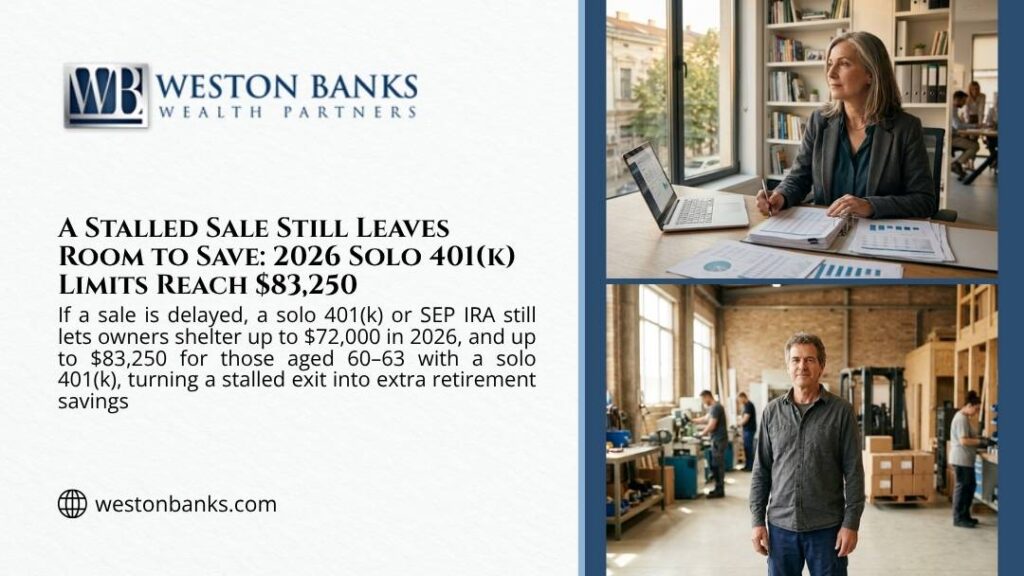
Business owners may have options such as a SEP IRA, SIMPLE IRA, solo 401(k), cash balance plan, or another qualified plan depending on the company and employee situation. These tools can support retirement planning even if the business sale is delayed. The right plan can also help with tax strategy, although contribution rules, deadlines, employee coverage, and cash flow must be reviewed with a CPA or retirement plan specialist.
Selling retirement plans as a quick fix is not the answer. Protecting them is usually the better move. Retirement assets may have legal protections that ordinary business cash does not. Before using personal retirement assets to support the company, get asset protection advice, tax advice, and a written scenario analysis.
Revisit the Tax Plan Before the Next Buyer Shows Up
When a deal falls through, most owners want to relist quickly. That may be the right call. But before doing so, pause and review tax strategy. A delayed sale can create a second chance to improve structure.
Tax planning is often strongest before the next letter of intent. Once a buyer appears and deal terms harden, options may narrow. This is especially true for entity structure, charitable planning, installment sale terms, capital gains planning, estate transfers, and pre-sale gifts.
Weston Banks discusses the tax implications of selling a small business before retirement, helping owners understand what matters before negotiations restart.
Here’s the thing: the highest offer is not always the best retirement outcome. Deal structure can matter as much as price. An all-cash sale, seller note, earnout, asset sale, stock sale, retained real estate, or rollover equity stake can produce very different tax and cash flow results. A smart asset protection strategy should consider after-tax proceeds, not just headline valuation.
Why Comprehensive Planning Matters More After a Failed Sale
A failed sale usually exposes more than one planning gap. It can affect retirement income, tax timing, investment allocation, estate documents, insurance coverage, business debt, and the next exit strategy. That is why a narrow investment-only conversation may not be enough.
This is where Weston Banks’ planning style fits the problem. The firm’s work is not centered only on picking investments. It is built around comprehensive planning for business owners and high-net-worth individuals who need their cash flow, taxes, business succession, estate planning, and investment management to work together.
For a Raleigh entrepreneur, that could mean reviewing whether the retirement plan still works without sale proceeds, whether the business needs a cleaner exit strategy, whether personal assets are exposed to company risk, and whether tax mitigation options should be reviewed before another buyer appears.
Qualified business owners may also need a broader investment discussion after a failed sale. Traditional stocks and bonds may still play an important role, but some high-net-worth clients may be eligible to review alternative investments or private placement opportunities as part of a larger asset protection strategy.
These options are not suitable for everyone, and they do not remove risk. But when used carefully, reviewed properly, and matched to a client’s full financial plan, they may help create a more diversified approach than relying on one private business as the main retirement asset.
The point is not to chase complexity. The point is to avoid a one-legged retirement plan. If the business sale falls through, your financial life needs more than a new buyer. It needs a coordinated plan.
Update the Business Exit Strategy Instead of Chasing the Same Deal Twice
A failed sale can sting, but it can also show what buyers really think. Maybe the valuation was too high. Maybe records were not clean enough. Maybe the owner was too central to operations. Maybe the buyer could not get financing. Maybe the industry cooled off.
Small business exit strategy work should answer a few hard questions. Can the company run without the founder? Are recurring revenues clear? Are contracts transferable? Are margins defensible? Can the management team stay? Are customer relationships documented? Is the business worth more with real estate separated? Does an internal sale make more sense than a third-party sale?
Weston Banks addresses timing in its discussion of when to start planning to sell a business. Beginning early gives an owner more opportunity to improve value, reduce risk, and avoid a rushed sale.
A good second attempt is not just another listing. It is a better-prepared business, backed by cleaner financials, clearer cash flow, stronger contracts, and a retirement plan that does not collapse if the buyer asks for a discount.

Use Insurance as Part of Business Protection
Business protection is not only legal structure. Insurance can act as security for businesses when things go sideways. After a failed sale, review coverage with fresh eyes.
General liability may not be enough. Depending on the company, the owner may need professional liability, cyber coverage, employment practices liability, key person insurance, disability coverage, buy-sell funding, life insurance, and umbrella coverage. Business debt protection insurance may also matter if loans or guarantees could hurt personal wealth.
Risk management is one of the services Weston Banks lists in its broader planning work, including insurance policies and assessments. That fits the real problem here. Retirement protection is not only about investments. It is also about preventing one lawsuit, disability, creditor issue, or uninsured event from damaging everything you have built.
Build Personal Asset Protection Into Estate Planning
A failed business sale is also a good time to review estate planning. That may sound odd if retirement is the urgent concern, but the two are connected. If your business remains your largest asset, your estate plan must account for ownership, voting control, income needs, tax exposure, heirs, insurance, and who can act if you cannot.
Business owners often update estate documents after a sale. The better move is to update them before the next sale attempt. That way, personal asset protection, family goals, business succession planning, and tax mitigation can work together.
Weston Banks offers dedicated estate planning guidance for business owners and families. This does not replace an estate attorney. Rather, it helps coordinate the financial side so legal documents reflect the owner’s real balance sheet and retirement income needs.
Asset protection examples may include correct account titling, trust review, beneficiary updates, buy-sell agreement review, insurance alignment, and separation of operating assets from personal assets. The right structure depends on the owner’s facts. Generic internet advice can do more harm than good.
Consider Alternative Income Paths if the Sale Is Delayed
If the business does not sell now, retirement may still be possible. It may just look different. Some owners reduce their role but keep ownership. Some hire an operator. Some sell a minority interest. Some keep business real estate and lease it. Some use a management buyout. Some transition to family. Some build multiple income streams outside the company while preparing for a later sale.
Weston Banks has written about building multiple income streams for retirement. That idea is especially useful after a failed exit. One income source can fail. Several income sources can help soften the blow.
A business sale should be the cherry on top, not the only bridge to retirement. That may sound blunt, but it is often the truth owners need to hear.
When a Financial Advisor Can Help After a Failed Sale
A failed sale involves more than one professional. You may need a CPA, attorney, M&A advisor, valuation expert, insurance specialist, lender, and wealth advisor. The challenge is coordination. If every advisor works in a separate lane, the owner can still end up with a scattered plan.
A financial advisor can help translate the failed deal into a personal retirement plan. That may include updated cash flow projections, investment management, tax-aware planning, alternative investment review, estate coordination, and business succession planning.
Weston Banks is especially relevant for Raleigh business owners and high-net-worth individuals who need more than basic portfolio advice. Its business succession planning service is closely aligned with this issue, and its retirement advisor services speak to the income side of the plan.
This also reflects how many local clients actually search for a firm after a referral. A business owner may hear about Weston Banks through another entrepreneur, an NC State or UNC connection, or a Raleigh community relationship, then search online for terms like “financial advisor Raleigh,” “help with retirement funds,” or “financial advising firms with alternative investments.” This should meet that person right where the concern starts: the business sale did not go as planned, and retirement now needs a better backup plan.
| Question to Ask | Why It Matters |
| Can my retirement work without a business sale this year? | Shows whether the plan is resilient or sale-dependent |
| How much income can my current assets produce? | Turns net worth into usable cash flow |
| What personal assets are exposed to business risk? | Identifies personal asset protection gaps |
| What tax options disappear once I sign an LOI? | Helps avoid rushed tax decisions |
| What would make my business more sellable in 12 to 24 months? | Creates a stronger second exit attempt |
What Not to Do After the Deal Falls Apart
Do not slash the price without first learning why the buyer walked. Do not drain retirement accounts without tax and legal advice. Do not sign personal guarantees just to keep the business moving unless you understand the downside. Do not mix personal and business money. Do not treat a small business LLC as a shield if you have ignored legal formalities. Do not wait until the next buyer appears to start tax planning.
And do not assume that one failed sale means retirement is gone. This might work for you: treat the failed sale as a planning deadline. You now know the risk is real. You can still help protect the business, review your assets, rebuild cash flow, and prepare a better exit.
FAQ
Can I still retire if my business does not sell?
Yes, but the plan may need to change. You may need to delay full retirement, reduce owner involvement gradually, create income from existing investment accounts, keep partial ownership, or prepare the business for a better sale later. The key is to model retirement income without assuming one perfect closing.
Should I use retirement savings to keep my business alive?
Only after you review the tax cost, legal risk, and long-term impact with your advisor and CPA. Retirement accounts may be one of your most important protected assets. Draining them to support the business can solve one cash flow issue while creating a larger retirement problem.
How do I protect personal assets from business debt?
Start with proper separation between personal and business finances. Review your entity structure, personal guarantees, insurance coverage, contracts, and estate documents. A small business LLC may help, but it must be maintained correctly. Speak with an attorney before a creditor issue appears, not after.
Should I lower my asking price after a failed sale?
Not automatically. First, find out why the deal failed. If the issue was valuation, a price adjustment may help. If the issue was weak financial records, customer concentration, owner dependence, or financing, lowering the price may not fix the real problem.
When should I talk to a financial advisor after a failed business sale?
Immediately. A failed sale can affect retirement income, tax timing, cash flow, estate planning, insurance, and investment strategy. The earlier you review those moving parts, the more options you may have before the next buyer appears.
A Better Next Move for Business Owners Who Still Want to Retire Well
If you are still asking, “How do I protect my retirement if my business sale falls through,” the answer is to build a plan that can stand even when the deal does not. That means reviewing cash flow, protecting retirement accounts, revisiting tax strategy, separating business and personal risk, updating estate documents, and improving the company before the next buyer sees it.
A failed sale is not the end of the road. It is a warning light. And warning lights are useful when you act before the engine fails.
Weston Banks is best suited for Raleigh-area business owners, North Carolina entrepreneurs, and high-net-worth individuals who want a coordinated retirement, tax, investment, and succession plan before making their next exit decision. If your business sale has stalled, or if you want to help protect your retirement before your next move, start with a private conversation with the Weston Banks Wealth Partners team. To discuss your next step, schedule a private conversation with Weston Banks.
This article is for educational purposes only and should not be treated as legal, tax, or individualized investment advice. Business owners should consult qualified legal, tax, and financial professionals before taking action.